
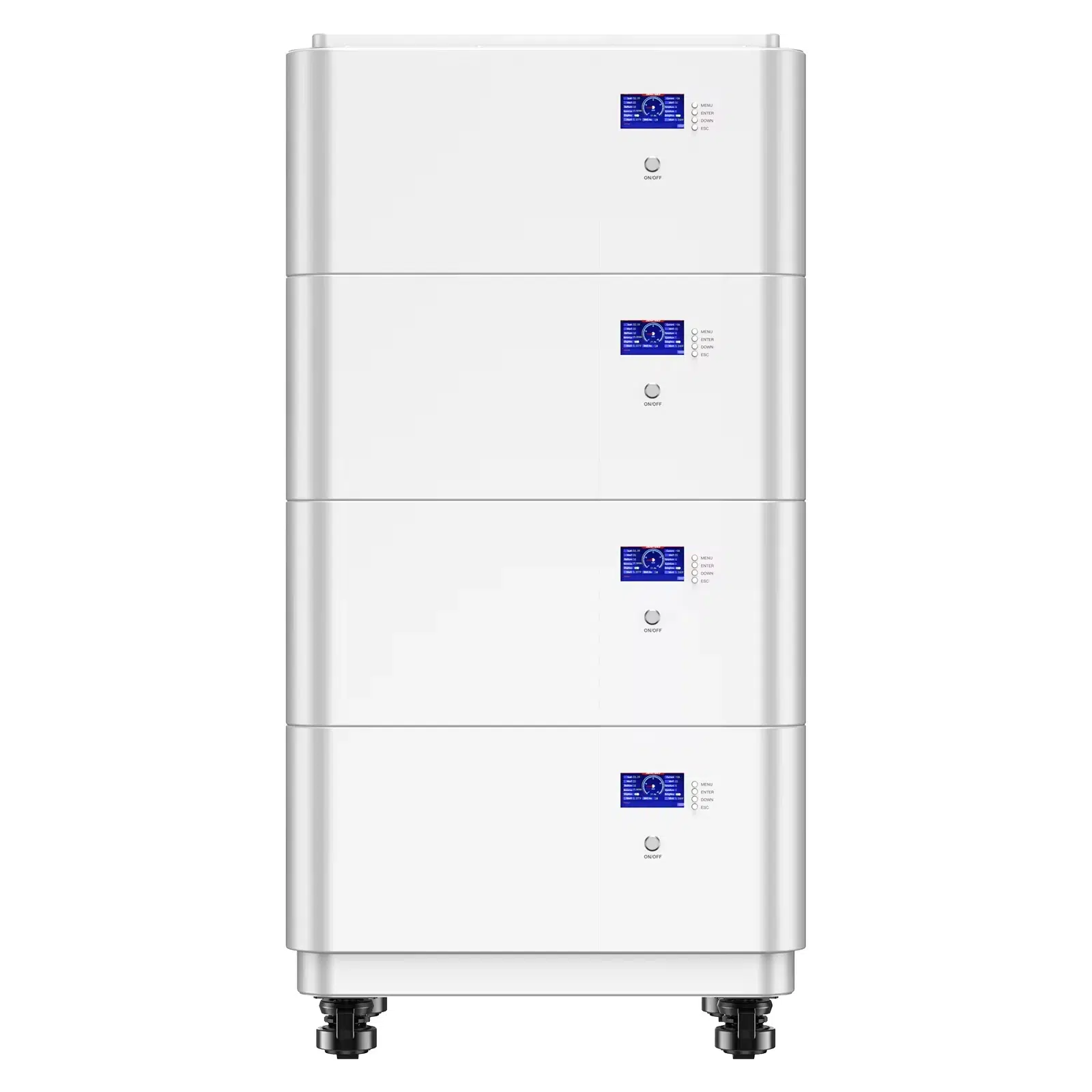
51.2V All-in-One Home ESS | 100Ah, 200Ah and 280Ah
• MOQ: 10 Units
• Production Lead Time: Approximately 25–35 Days After Technical Confirmation
Shipping: Sea Freight, Approved Dangerous-Goods Air Freight, or Land Transport
• Trade Terms: EXW / FOB / CIF
•Payment Terms: T/T / L/C
• Sea / Air / Land Shipment: 10FT, 20FT, 40FT, 60FT
Category Page:All-in-One Home ESS ,PowerWall HESS ,Inverter
PRODUCT CATEGORIES
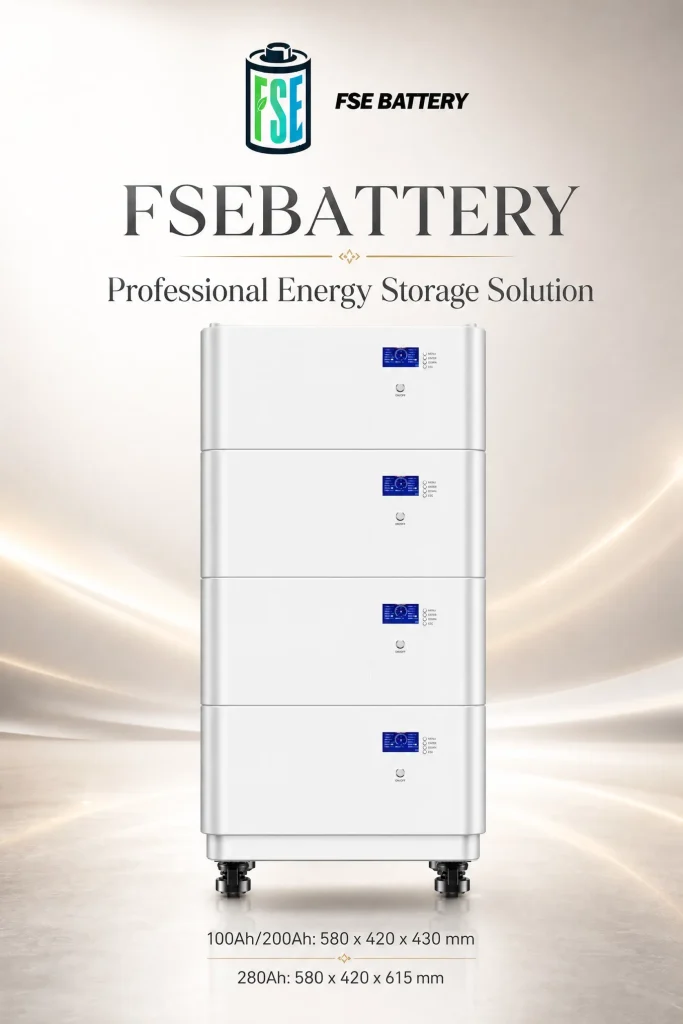
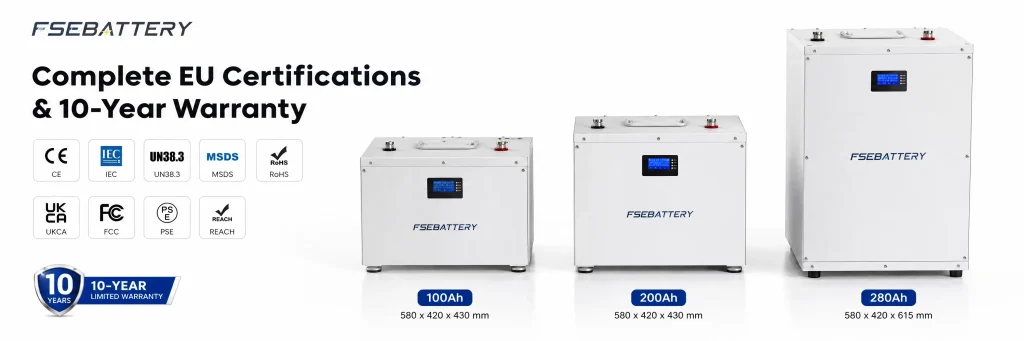
The FSEBATTERY 51.2V home energy storage system is a modular LiFePO4 battery solution designed for residential solar storage, backup power, and customized energy projects. Available in 100Ah, 200Ah, and 280Ah configurations, the system provides flexible energy capacity for homes, solar installers, distributors, and energy-storage integrators.
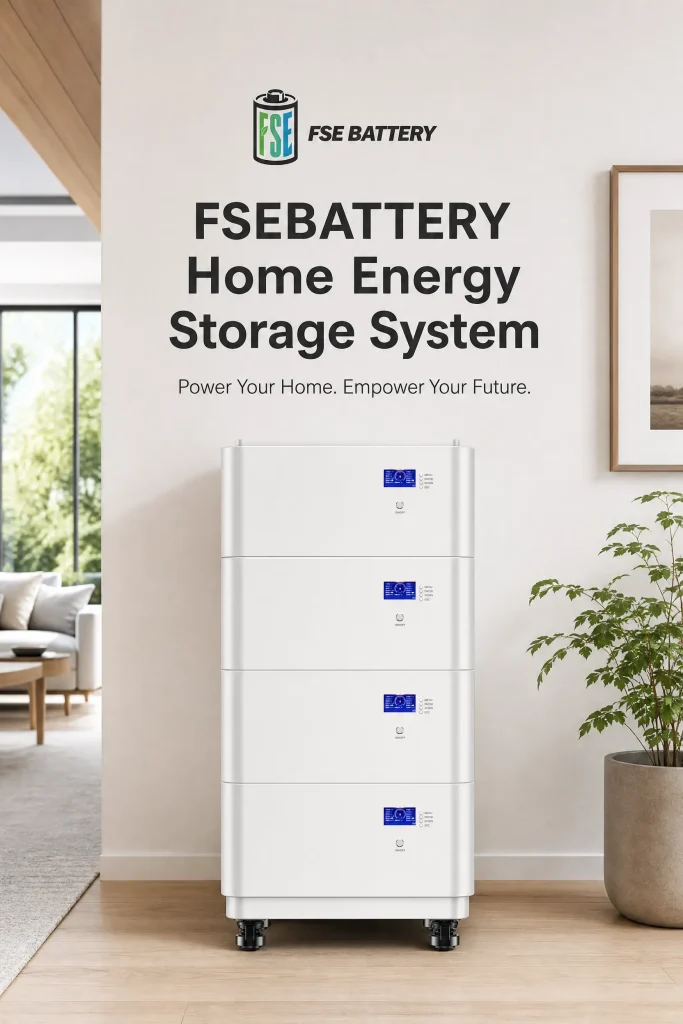
Three Capacity Options for Different Energy Requirements
The 51.2V home energy storage system is available in three capacity options. All models operate at a nominal voltage of 51.2V, while the selected amp-hour capacity determines the total nominal energy available for solar storage and backup power.
Nominal battery energy is calculated as follows:
Nominal energy = Nominal voltage × Nominal capacity ÷ 1,000
51.2V 100Ah — 5.12kWh
The 100Ah model provides 5.12kWh of nominal energy. It is suitable for essential household loads, smaller photovoltaic systems, and projects that may require modular expansion later.
51.2V 200Ah — 10.24kWh
The 200Ah model provides 10.24kWh of nominal energy. It offers longer backup time and greater solar self-consumption capacity for medium-sized residential energy systems.
51.2V 280Ah — 14.33kWh
The 280Ah model provides approximately 14.33kWh of nominal energy. It is intended for homes with higher daily energy use, larger photovoltaic arrays, or longer backup-power requirements.
This 51.2V home energy storage system combines scalable battery capacity, smart BMS protection, optional inverter communication, and a durable metal enclosure. It can be configured according to the required backup duration, household load, installation environment, and communication protocol.
Actual usable energy depends on the permitted depth of discharge, inverter efficiency, battery temperature, protection settings, cable losses, and reserved battery capacity.
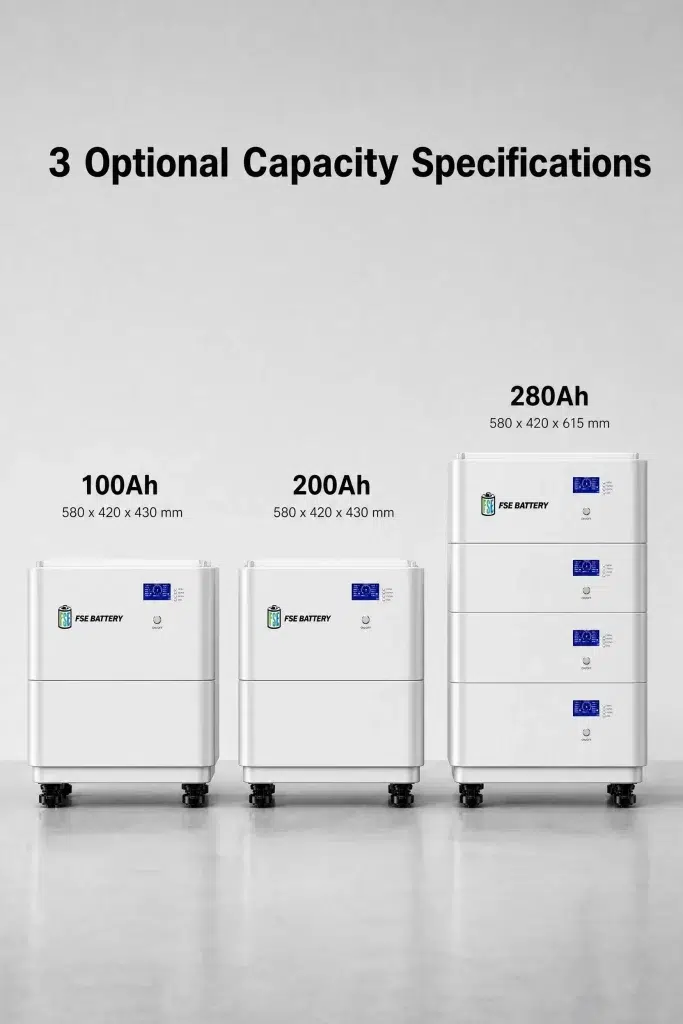
Modular and Expandable Battery Design
The modular structure allows the 51.2V home energy storage system to be configured according to the initial project requirement while supporting planned capacity expansion. Single-unit, double-layer, and multi-layer configurations can be considered according to available space, inverter capacity, and household energy demand.
Flexible Capacity Expansion
Single-unit, double-layer, and multi-layer configurations can be considered according to household energy use, available installation space, and inverter capacity.
This flexible structure helps distributors and installers serve projects with different energy-storage requirements without changing the basic 51.2V system platform.
Important Expansion Requirements
Additional battery modules should use compatible:
- Cell chemistry and nominal voltage
- Battery capacity and BMS firmware
- CAN or RS485 communication protocol
- State of charge
- Cable length and conductor size
- Fuse, breaker, and busbar ratings
Smart BMS Protection and Communication
Each 51.2V home energy storage system can be configured with a JBD or JK battery management system. The BMS monitors cell voltage, battery current, temperature, state of charge, balancing status, alarms, and protection conditions.
Battery Protection Functions
Depending on the selected BMS and project configuration, protection functions may include:
- Cell overvoltage protection
- Cell undervoltage protection
- Charge and discharge overcurrent protection
- Short-circuit protection
- High- and low-temperature protection
- Cell-voltage monitoring
- State-of-charge monitoring
- Cell balancing
- Alarm and fault recording
Monitoring and Communication Options
Available communication and monitoring options include:
- Bluetooth
- Mobile APP
- WiFi
- 4G
- GPS
- LCD display
- RS485
- RS232
- CAN bus
- RJ45
- Modbus
Electrical Performance and Inverter Compatibility
All three configurations use a nominal voltage of 51.2V, a maximum charge voltage of 58.4V, and a specified discharge cut-off voltage of 40V.
The maximum continuous charge current and maximum continuous discharge current are both listed as 100A.
Battery-Side Power
At nominal voltage, the theoretical battery-side DC power is:
51.2V × 100A = 5.12kW DC
This value should not be interpreted as guaranteed 5.12kW AC inverter output. Actual current increases as battery voltage decreases, and inverter conversion losses must also be considered.
Information Required for Inverter Matching
Before ordering, please provide:
- Inverter brand
- Exact inverter model
- Rated AC output power
- Peak or surge power
- Battery voltage range
- CAN or RS485 protocol
- Connector and pin definition
- Maximum battery charge current
- Maximum battery discharge current
Final compatibility should be confirmed according to inverter efficiency, battery voltage under load, surge demand, BMS current limits, and cable voltage drop.
Metal Enclosure and Installation Design
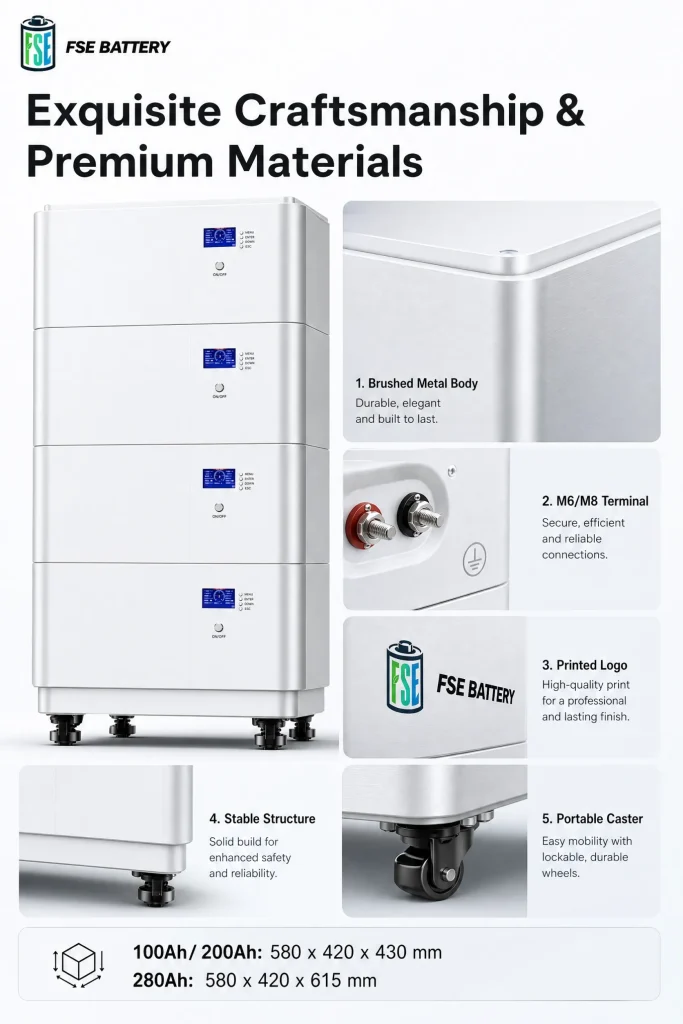
The battery uses a metal enclosure with M6 or M8 terminal options. The product structure is designed for floor-standing residential energy-storage applications.
Dimensions and Weight
| Model | Dimensions (L × W × H) | Weight |
|---|---|---|
| 51.2V 100Ah | 580 × 420 × 430mm | 45.5kg |
| 51.2V 200Ah | 580 × 420 × 430mm | 142kg |
| 51.2V 280Ah | 580 × 420 × 615mm | 197kg |
Final dimensions and weight should be confirmed against the approved production drawing and selected optional configuration.
Installation Considerations
The installation location should provide:
- Adequate floor-loading capacity
- Sufficient service clearance
- Accessible battery isolation
- Protected cable routing
- Suitable ventilation
- Protection from flooding and direct heat
- Safe handling space
The heavier configurations may require lifting equipment and more than one trained installer.
IP65 Protection and Temperature Range
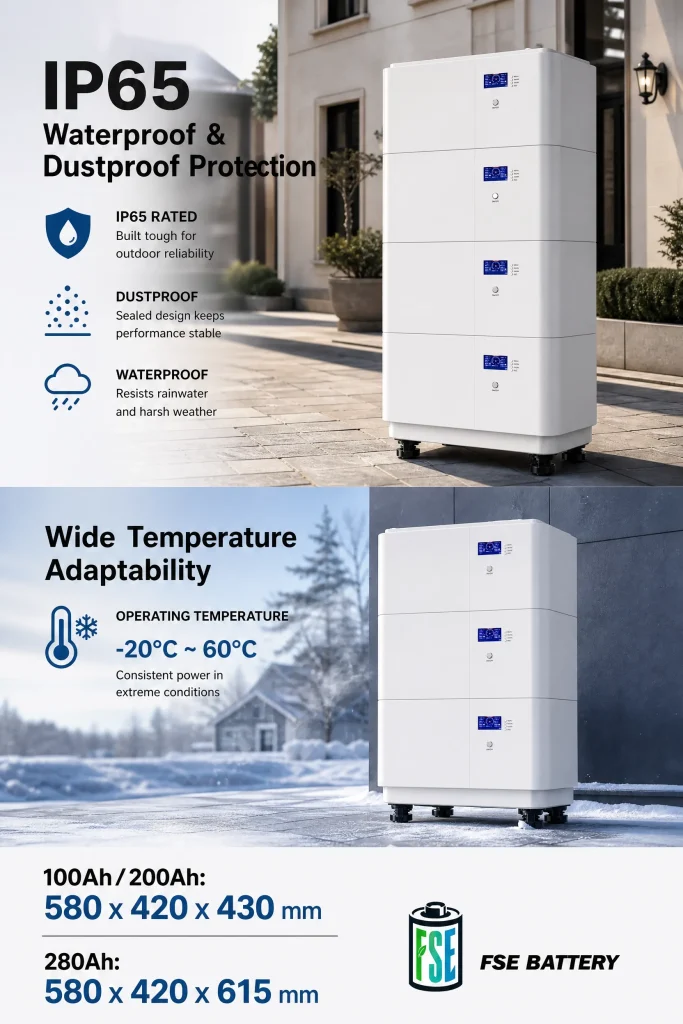
The battery enclosure is specified with an IP65 rating. This provides a defined level of dust and water-ingress protection but does not mean that the battery can be submerged.
Environmental Protection
For outdoor or semi-outdoor projects, the system should still be protected from:
- Flooding
- Standing water
- Direct roof runoff
- Long-term direct sunlight
- Unsealed cable entries
- Corrosive environments
- Sources of excessive heat
Protected outdoor installation is recommended where applicable.
Operating Temperature Limits
| Operating condition | Temperature range |
| Charging | 0°C to 50°C |
| Discharging | −20°C to 60°C |
| Storage | −10°C to 50°C |
The standard battery should not be charged below 0°C unless an approved low-temperature charging strategy is installed.
Optional self-heating can be configured for cold-climate projects. Heating activation temperature, power consumption, control logic, and charging interlock should be confirmed during technical evaluation.
This product family is specified for charging at 0°C to 50°C and discharging at −20°C to 60°C. Confirm the approved datasheet, selected BMS configuration, and local installation requirements before ordering.
Residential Solar and Backup Applications
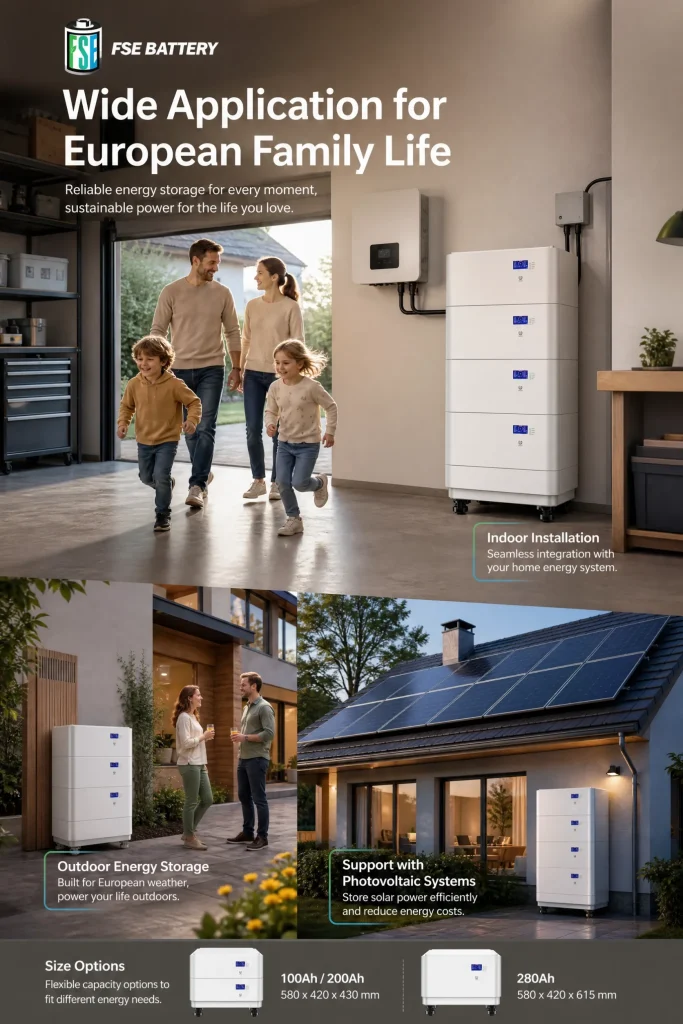
The 51.2V home energy storage battery can be integrated into residential photovoltaic, hybrid inverter, backup-power, and off-grid energy systems.
Solar Energy Storage
Excess photovoltaic energy generated during the day can be stored in the battery and used later when solar production decreases.
This can improve residential solar self-consumption and reduce dependence on grid electricity where the system design and local regulations allow.
Backup Power
When paired with a compatible inverter and transfer system, the battery can supply selected household circuits during a grid outage.
Backup time depends on:
- Usable battery energy
- Average household load
- Inverter efficiency
- Depth-of-discharge settings
- Temperature
- High-power appliance use
Estimated backup time can be calculated as:
Estimated backup time = Usable battery energy ÷ Average load
Hybrid and Off-Grid Systems
The battery can also be considered for hybrid and off-grid projects when the inverter voltage range, communication protocol, charge settings, and protection devices are compatible.
Technical Specifications
Electrical Specifications
| Specification | 100Ah | 200Ah | 280Ah |
| Lithium cell type | LiFePO4 | LiFePO4 | LiFePO4 |
| Nominal voltage | 51.2V | 51.2V | 51.2V |
| Nominal capacity | 100Ah | 200Ah | 280Ah |
| Nominal energy | 5.12kWh | 10.24kWh | 14.33kWh |
| Maximum charge voltage | 58.4V | 58.4V | 58.4V |
| Discharge cut-off voltage | 40V | 40V | 40V |
| Maximum continuous charge current | 100A | 100A | 100A |
| Maximum continuous discharge current | 100A | 100A | 100A |
| Internal resistance | ≤10mΩ | ≤10mΩ | ≤10mΩ |
| Self-discharge | ≤2% per month | ≤2% per month | ≤2% per month |
| Cycle life | >6,000 cycles* | >6,000 cycles* | >6,000 cycles* |
*Cycle life depends on depth of discharge, temperature, charge and discharge rate, and end-of-life capacity criteria. Final test conditions should be stated in the approved datasheet.
Mechanical and Environmental Specifications
| Specification | 100Ah | 200Ah | 280Ah |
| Dimensions | 580 × 420 × 430mm | 580 × 420 × 430mm | 580 × 420 × 615mm |
| Weight | 45.5kg | 142kg | 197kg |
| Battery case | Metal | Metal | Metal |
| Terminal | M6/M8 | M6/M8 | M6/M8 |
| IP rating | IP65 | IP65 | IP65 |
| Charge temperature | 0°C to 50°C | 0°C to 50°C | 0°C to 50°C |
| Discharge temperature | −20°C to 60°C | −20°C to 60°C | −20°C to 60°C |
| Storage temperature | −10°C to 50°C | −10°C to 50°C | −10°C to 50°C |
Optional Functions
Available options include:
- Self-heating
- Bluetooth
- Mobile APP
- WiFi
- 4G
- GPS
- LCD display
- RS485
- RS232
- CAN bus
- RJ45
- Modbus
- Power switch
- Circuit breaker
- Active balancing
- Customized logo and labeling
Certification Documentation and Warranty
Certification and transport documents must match the exact battery model, BMS configuration, capacity, and destination market.
Available Project Documentation
Depending on the selected model and order requirements, available documentation may include:
- Product datasheet
- User manual
- Battery wiring diagram
- BMS communication protocol
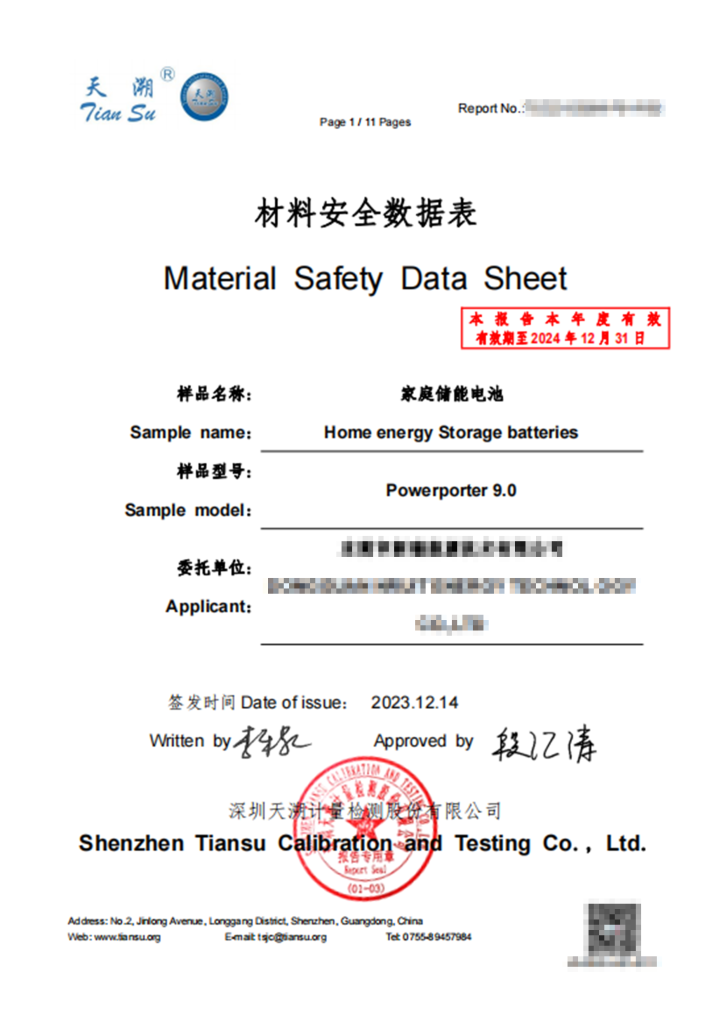
- MSDS
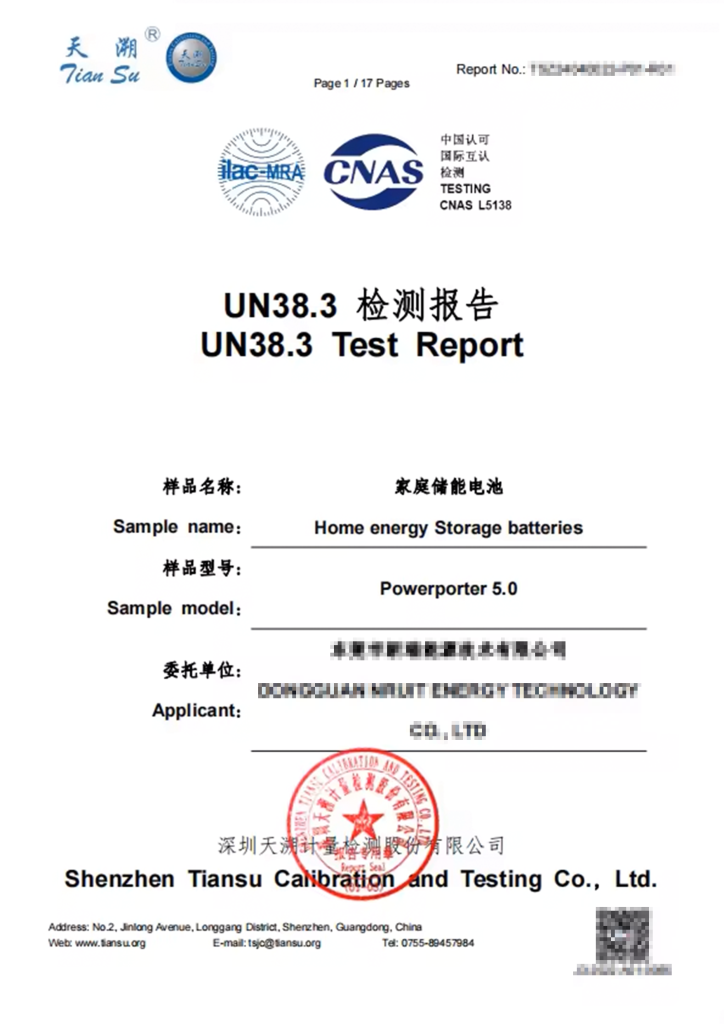
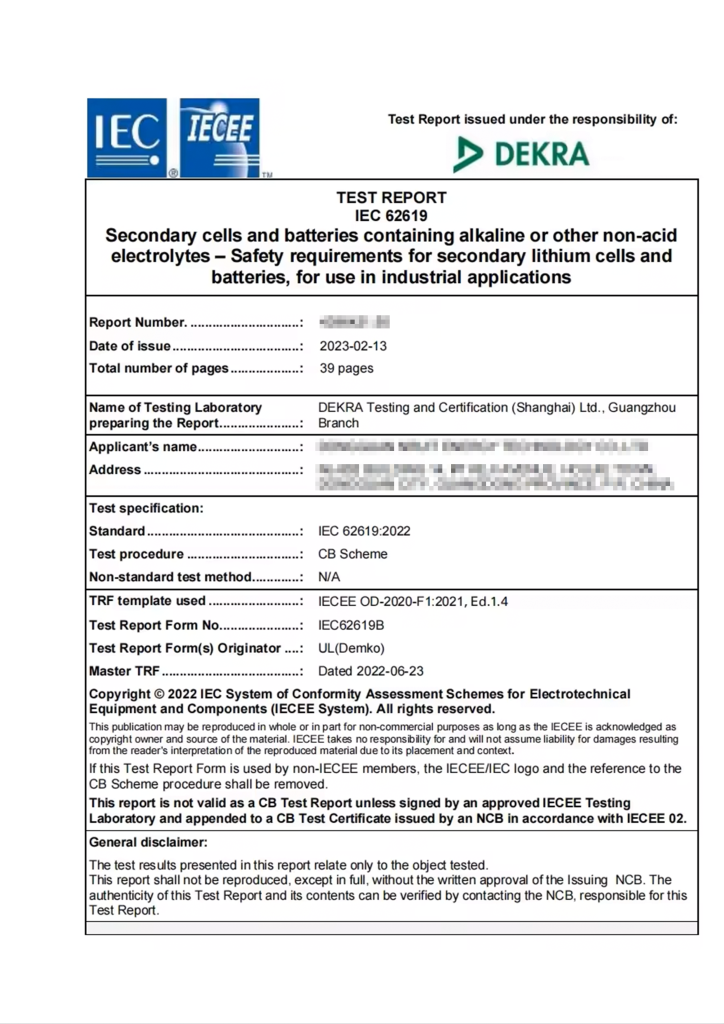
- UN38.3 test report or test summary
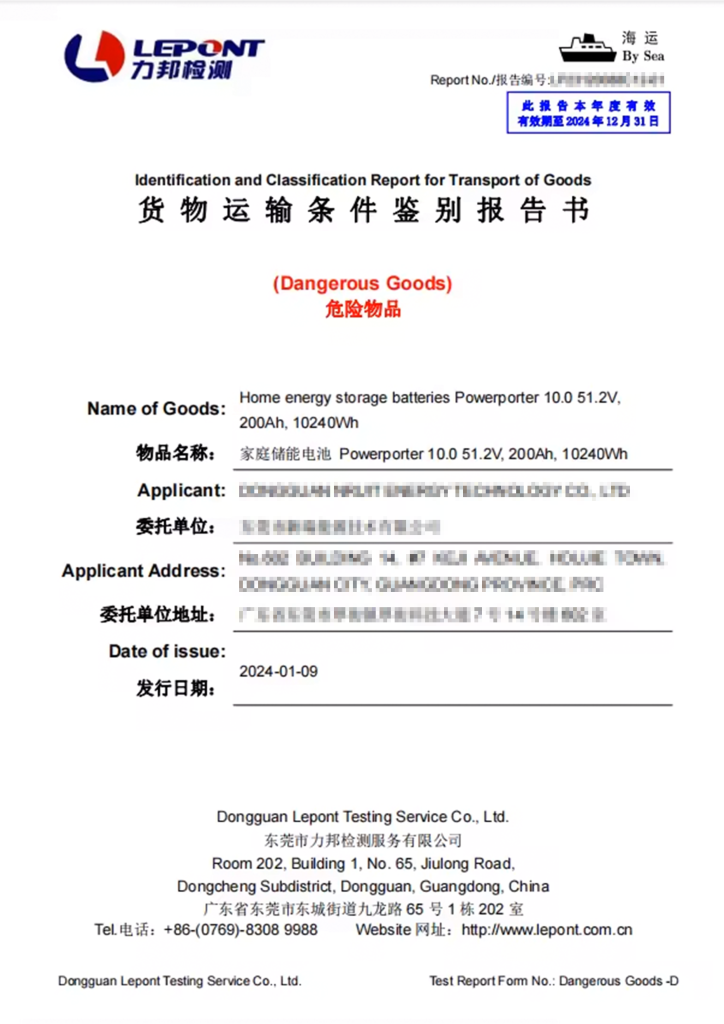
- Shipping classification documents
- Quality inspection report
- Certification documents applicable to the selected model
- Written warranty terms
Certification status should be confirmed using the report number, tested model, issuing laboratory, applicable standard, and issue date.
Limited Warranty
The battery is available with a 10-year limited warranty, subject to the written warranty terms for the approved product configuration.
Warranty terms should define:
- Warranty start date
- Covered components
- Permitted operating conditions
- Cycle or energy-throughput limits
- Installation requirements
- Exclusions
- Repair or replacement procedure
- Transportation responsibilities
OEM and ODM Home Energy Storage Solutions
FSEBATTERY supports OEM and ODM services for battery distributors, solar installers, system integrators, and private-label energy-storage brands.
Available Customization
Customization options may include:
- Battery capacity
- BMS brand and current rating
- CAN or RS485 communication
- Inverter protocol development
- Bluetooth and mobile APP
- WiFi, 4G, and GPS
- LCD display
- Self-heating
- Active balancing
- Power switch
- Circuit breaker
- Terminal type
- Enclosure appearance
- Silk-screen, label, or laser logo
- Packaging
- User manual
Information Required for a Quotation
Please provide:
- Required voltage and capacity
- Inverter brand and model
- CAN or RS485 protocol
- Continuous and peak load
- Required backup duration
- Installation environment
- Minimum and maximum temperature
- Optional functions
- Destination country
- Required certification documents
- Logo and packaging requirements
- Estimated order quantity
Customization may affect pricing, minimum order quantity, development time, production lead time, certification scope, and warranty conditions.
| Specifications | ||||||||||
| Lithium Cell Type | LiFePO4 | LiFePO4 | LiFePO4 | |||||||
| Nominal Voltage | 51.2V | 51.2V | 51.2V | |||||||
| Nominal Capacity | 100Ah | 200AH | 280AH | |||||||
| Nominal Energy | 5.12kWh | 10.24 kWh | 14.33 kWh | |||||||
| Max Charge Voltage | 58.4V | 58.4V | 58.4V | |||||||
| Discharge Cut-off Voltage | 40V | 40V | 40V | |||||||
| Max Continues Charge Current | 100A | 100A | 100A | |||||||
| Max Continues Discharge Current | 100A | 100A | 100A | |||||||
| Dimensions(L x W x H) | 580 x 420 x 430 mm | 580 x 420 x 430 mm | 580 x 420 x 615 mm | |||||||
| Weight | 45.5kg | 142kg | 197kg | |||||||
| Cycle Life | >6000 Cycles | >6000 Cycles | >6000 Cycles | |||||||
| Internal Resistance | ≤10 mΩ | ≤10 mΩ | ≤10 mΩ | |||||||
| Self-discharge | ≤2% per month | ≤2% per month | ≤2% per month | |||||||
| IP Rating | IP65 | IP65 | IP65 | |||||||
| Charge Temperature | 0°C ~ 50°C | 0°C ~ 50°C | 0°C ~ 50°C | |||||||
| Discharge Temperature | (-20°C ~ 60°C) | (-20°C ~ 60°C) | (-20°C ~ 60°C) | |||||||
| Storage Temperature | (-10℃ ~ 50℃) | (-10℃ ~ 50℃) | (-10℃ ~ 50℃) | |||||||
| Self-heating | Optional | Optional | Optional | |||||||
| LCD Display | Optional | Optional | Optional | |||||||
| Optional Upgrades | Self-heating / Bluetooth / APP / WiFi / 4G / GPS / LCD Display / RS485 / RS232 / CAN bus / RJ45 / Modbus / Power Switch / Circuit Breaker / Active Balance / etc | Self-heating / Bluetooth / APP / WiFi / 4G / GPS / LCD Display / RS485 / RS232 / CAN bus / RJ45 / Modbus / Power Switch / Circuit Breaker / Active Balance / etc | Self-heating / Bluetooth / APP / WiFi / 4G / GPS / LCD Display / RS485 / RS232 / CAN bus / RJ45 / Modbus / Power Switch / Circuit Breaker / Active Balance / etc | |||||||
| BMS | JBD BMS/JK BMS | JBD BMS/JK BMS | JBD BMS/JK BMS | |||||||
| Terminal | M6 / M8 | M6 / M8 | M6 / M8 | |||||||
| Battery Case | Metal | Metal | Metal | |||||||
| Warranty | 10 Years | 10 Years | 10 Years | |||||||
| Silk-screen / Label / Laser Logo | Yes | Yes | Yes | |||||||
| User Manual | Yes | Yes | Yes | |||||||
| OEM / ODM | Yes | Yes | Yes | |||||||
| Certifications | CE / MSDS / UN38.3/UL | CE / MSDS / UN38.3/UL | CE / MSDS / UN38.3/UL | |||||||
Frequently Asked Questions (FAQs)
What is the difference between the 100Ah, 200Ah, and 280Ah models?
All three models use a nominal voltage of 51.2V. The 100Ah version provides 5.12kWh, the 200Ah version provides 10.24kWh, and the 280Ah version provides approximately 14.33kWh of nominal energy.
The correct model depends on household energy use, required backup time, photovoltaic-system size, inverter capacity, and future expansion requirements.
Can this battery work with a 5kW inverter?
The battery is rated for a maximum continuous discharge current of 100A. At 51.2V, this equals approximately 5.12kW of nominal DC power.
A 5kW AC inverter may require more than 100A when inverter losses and lower battery voltage are considered. The inverter model and complete system configuration must therefore be evaluated before ordering.
Can the battery be charged below 0°C?
The specified charging temperature is 0°C to 50°C.
Charging below 0°C should only be allowed when the battery is equipped with an approved self-heating system and low-temperature charging protection.
Does IP65 mean the battery is completely waterproof?
No. IP65 provides defined protection against dust and water ingress but does not mean that the battery can be submerged.
The installation should still be protected from flooding, standing water, direct roof runoff, and unsealed cable entries.
Can additional battery modules be added later?
Expansion may be possible when the additional modules use compatible cells, voltage, BMS firmware, communication protocols, protection devices, and cable specifications.
Future expansion should preferably be planned during the initial system design.
What information is needed for an OEM or ODM quotation?
Please provide the required capacity, inverter model, communication protocol, continuous and peak load, installation temperature, optional functions, destination country, certification requirements, logo requirements, and estimated order quantity.
Request a Technical Proposal
To receive an accurate battery recommendation and quotation, send us your inverter model, household load, photovoltaic-system capacity, expected backup duration, installation environment, communication requirements, and estimated order quantity.
Our team will evaluate battery capacity, BMS configuration, inverter compatibility, optional functions, project documentation, and OEM or ODM requirements before preparing the proposal.
Do you support OEM/ODM?
We provide flexible OEM/ODM services to meet customer needs, including comprehensive support such as structure customization, BMS adjustment, and appearance design.
RELATED PRODUCTS
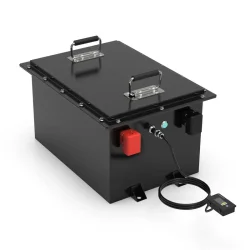
48V 50AH Golf Cart Battery

24V 200AH Equipment Batteries
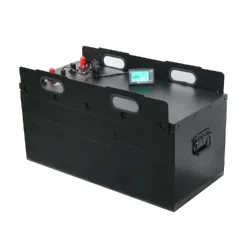
36V 60AH Forklift Batteries
12V 30AH Car Starter Lithium Battery
24V 50AH Equipment Batteries