
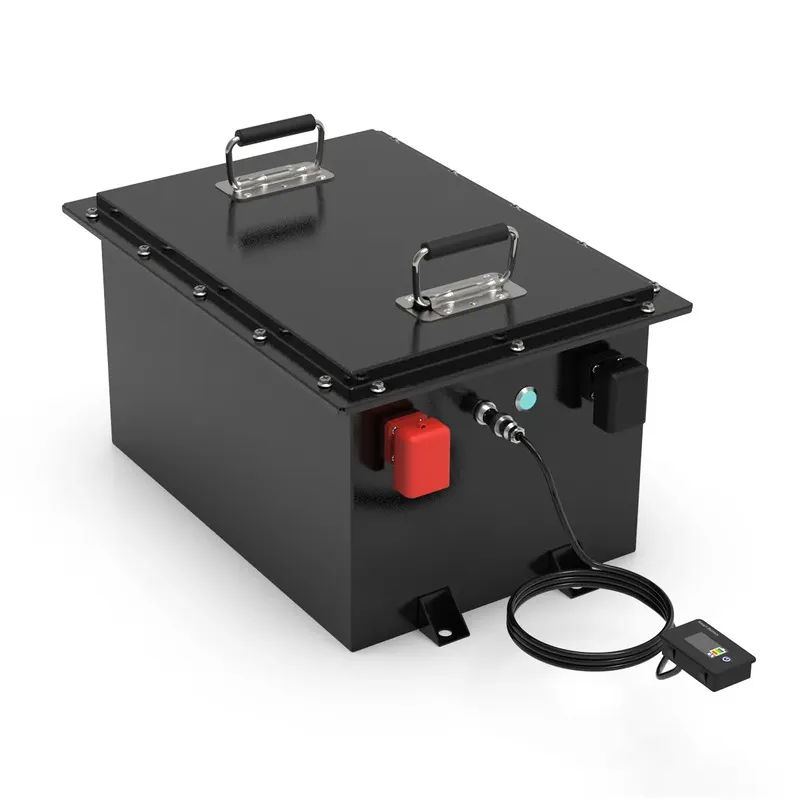
72V 200AH Golf Cart Battery
• MOQ: 10
• Delivery: 25 Days
• Customizable / OEM / ODM: Yes
• Delivery Terms: FOB, EXW, CIF
• Payment: T/T, L/C, PayPal
• Sea / Air / Land Shipment: 10FT, 20FT, 40FT, 60FT
Category Page:72V batteries ,Golf Cart Battery,Shop by Voltage 72V
PRODUCT CATEGORIES
Product Overview
The 72V 200AH Golf Cart Battery is a high-capacity LiFePO4 power solution developed for electric golf carts, resort vehicles, sightseeing carts, utility vehicles, and other high-voltage electric platforms. With 200Ah capacity and 15.36kWh of nominal energy, it is designed for applications that require extended operating time, stable power delivery, and reliable daily performance.
Although this product is classified as a 72V battery system, its actual nominal voltage is 76.8V. This voltage configuration is commonly used in 72V-class LiFePO4 systems. Before installation, the vehicle controller, motor, charger, wiring, connectors, communication protocol, and battery compartment must be checked for compatibility.
FSEBATTERY supplies a complete range of lithium golf cart batteries for manufacturers, distributors, fleet operators, golf courses, resorts, and electric vehicle conversion projects.
Why Choose This 72V 200AH Golf Cart Battery?
The 72V 200AH Golf Cart Battery combines a high-capacity LiFePO4 battery pack, an integrated smart BMS, a durable metal enclosure, and flexible communication options. It is suitable for commercial vehicles that operate for long periods and require consistent energy delivery throughout the working day.
Key product advantages include:
- 76.8V nominal voltage for 72V-class electric vehicles
- 200Ah nominal capacity
- 15.36kWh nominal energy
- Up to 190A continuous charge and discharge current
- More than 6,000 cycles at 80% DOD under specified 0.2C test conditions
- Integrated JBD or JK smart BMS options
- IP65-rated metal enclosure
- Optional self-heating for cold-region projects
- Optional Bluetooth, APP, LCD, CAN, RS485, RS232, RJ45, and Modbus
- OEM enclosure, connector, cable, branding, and software customization
Final electrical settings and optional functions are confirmed according to the target vehicle and project requirements.
15.36kWh Capacity for Extended Operation
With 15.36kWh of nominal energy, the 72V 200AH Golf Cart Battery provides substantially more stored energy than lower-capacity 72V battery options. This makes it suitable for golf carts and fleet vehicles that require longer operating periods, fewer charging interruptions, or additional reserve capacity.
However, battery capacity alone does not determine the exact driving range. Actual range depends on vehicle weight, passenger load, motor power, controller efficiency, speed, terrain, tire pressure, ambient temperature, route conditions, and driving behavior.
For customers comparing different voltage and capacity options, FSEBATTERY also provides additional 72V lithium battery solutions for electric vehicles and industrial applications.
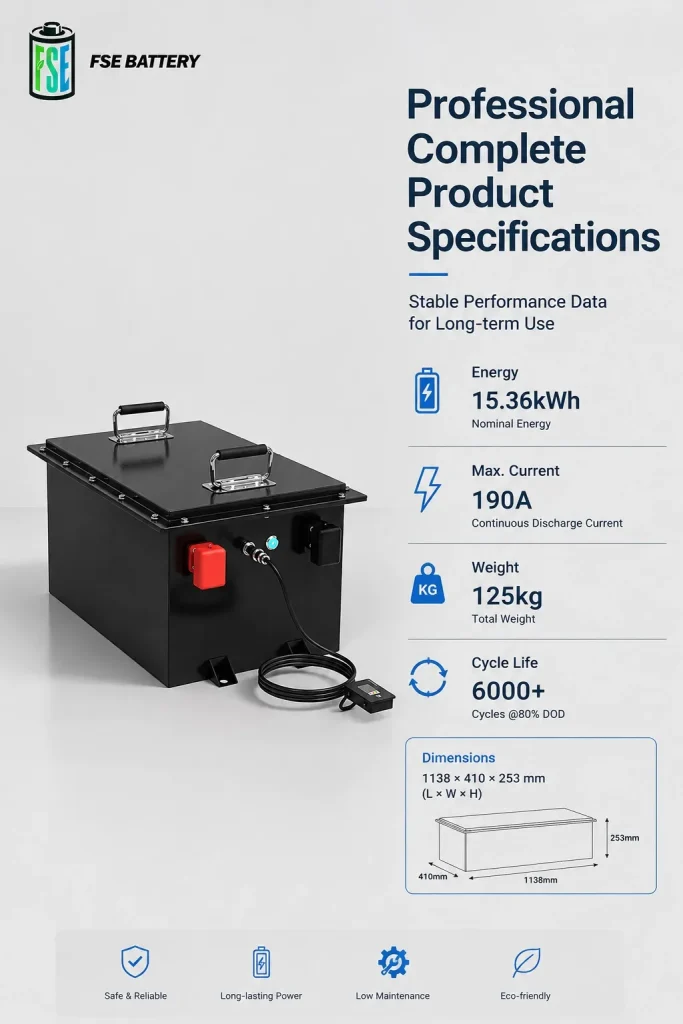
Technical Specifications
The principal specifications of the battery are as follows:
- Lithium cell type: LiFePO4
- System voltage class: 72V
- Nominal voltage: 76.8V
- Nominal capacity: 200Ah
- Nominal energy: 15.36kWh
- Maximum charge voltage: 86.4V
- Discharge cut-off voltage: 60V
- Maximum continuous charge current: 190A
- Maximum continuous discharge current: 190A
- Dimensions: 1138 × 410 × 253 mm
- Approximate weight: 125kg
- Cycle life: More than 6,000 cycles at 80% DOD under specified 0.2C test conditions
- Internal resistance: ≤10mΩ
- IP rating: IP65
- Battery enclosure: Metal
- Terminal options: M6 or M8
- BMS options: JBD or JK
Maximum current capability must be matched with the selected cells, BMS settings, charger, controller, cables, connectors, and thermal design. Final engineering parameters should therefore be confirmed before production.
Smart BMS Protection and Communication
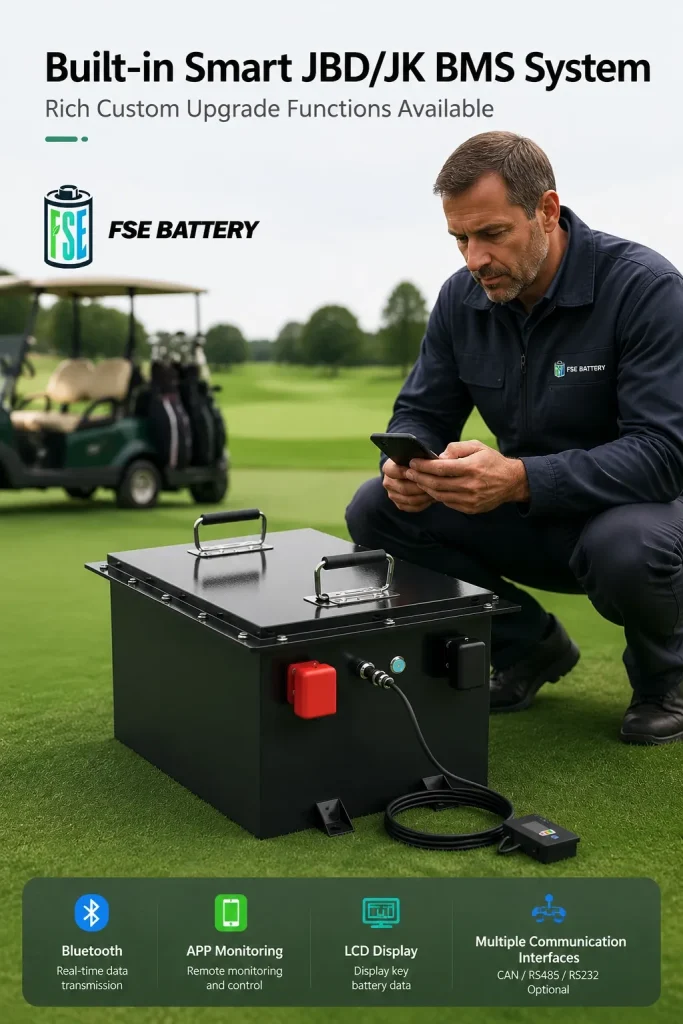
The integrated battery management system continuously monitors important operating data, including cell voltage, battery voltage, current, and temperature. It also provides protection against overcharge, over-discharge, overcurrent, short circuit, and abnormal temperature conditions.
JBD or JK BMS configurations are available according to project requirements. Optional communication and monitoring functions include Bluetooth, mobile APP access, LCD display, CAN bus, RS485, RS232, RJ45, Modbus, WiFi, 4G, and GPS.
For OEM integration, the BMS communication protocol must be matched with the vehicle controller, dashboard, charger, or vehicle control unit. Customers requiring additional information can review FSEBATTERY’s battery management systems and communication options.
Charger and Vehicle Compatibility
A compatible LiFePO4 charger with the correct charging profile is required for this battery. The charger must support the battery’s 76.8V nominal voltage and 86.4V maximum charge voltage.
An existing 72V lead-acid charger should not be used unless its output voltage, charging stages, termination logic, and communication functions have been professionally verified. An unsuitable charger may prevent the battery from charging correctly or trigger BMS protection.
Before ordering, confirm the following information:
- Vehicle brand and model
- Controller input voltage range
- Motor voltage and rated power
- Existing battery type
- Charger output voltage and current
- Battery compartment dimensions
- Connector type and cable size
- Mounting method
- Communication protocol
- Expected daily operating distance
FSEBATTERY can also provide compatible lithium battery chargers according to the battery voltage, capacity, charging current, connector, and communication requirements.
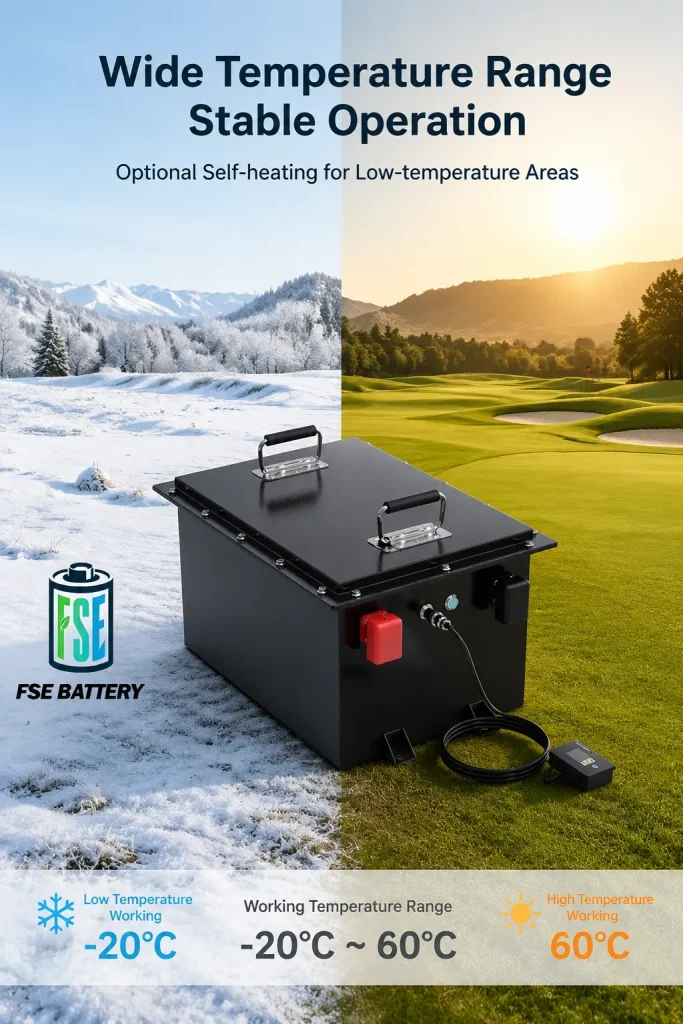
Wide Operating Temperature Range
The battery supports discharge operation from -20°C to 65°C. Its standard charging temperature range is 0°C to 50°C, while the recommended storage temperature range is -10°C to 50°C.
Charging a standard LiFePO4 battery below 0°C is not recommended unless an approved low-temperature charging solution is installed. For cold-region applications, an optional self-heating system can be configured to warm the battery before charging.
Actual low-temperature performance depends on the selected cells, BMS settings, heating strategy, insulation design, charger control, and installation environment.
IP65 Metal Enclosure
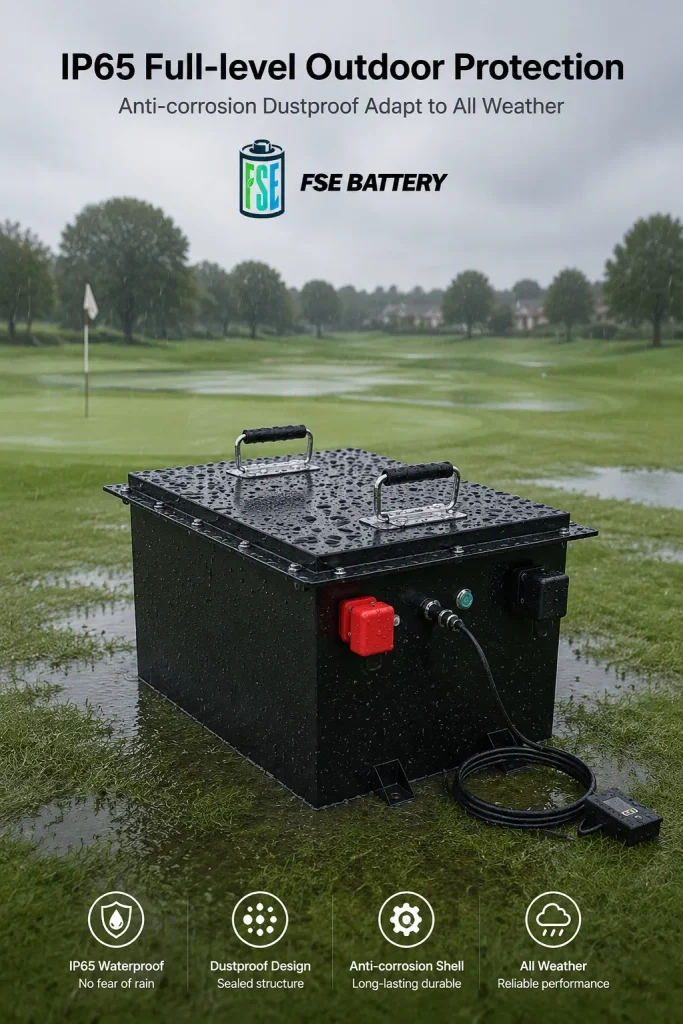
The 72V 200AH Golf Cart Battery uses a durable metal enclosure with an IP65 protection rating. When correctly installed and sealed, the enclosure is designed to protect internal components against dust ingress and low-pressure water jets.
IP65 does not mean that the battery can be submerged in water. The pack should not be installed in areas exposed to flooding, standing water, high-pressure washing, or prolonged immersion.
To maintain the intended protection level, cable glands, connectors, covers, service ports, and mounting interfaces must remain properly installed and sealed. Any customized openings should be evaluated during enclosure design.
Installation and Secure Mounting
The battery measures 1138 × 410 × 253 mm and weighs approximately 125kg. Therefore, it must be installed using suitable lifting equipment and trained personnel. It should not be manually lifted or positioned by one person.
Reinforced lifting handles support controlled handling with appropriate equipment, while the bottom mounting feet help secure the battery inside the vehicle. The final installation structure must prevent movement, vibration, impact, and cable stress during vehicle operation.
Before installation, verify:
- Available compartment length, width, and height
- Structural load capacity of the vehicle
- Mounting-hole positions
- Cable routing and bend radius
- Connector accessibility
- Ventilation and service space
- Protection against collision and road debris
- Controller and charger compatibility
The battery should be securely fixed according to the vehicle manufacturer’s requirements and the approved project drawing.
Typical Applications
This high-capacity battery can be configured for a variety of 72V electric vehicle applications, including:
- Electric golf carts
- Golf course fleets
- Resort and hotel transportation
- Sightseeing vehicles
- Tourism and shuttle carts
- Gated-community vehicles
- Campus transportation
- Electric utility carts
- Industrial-site vehicles
- Customized 72V electric platforms
Vehicle compatibility must be evaluated individually. A battery should not be selected only by matching the advertised system voltage.
LiFePO4 Compared with Lead-Acid Batteries
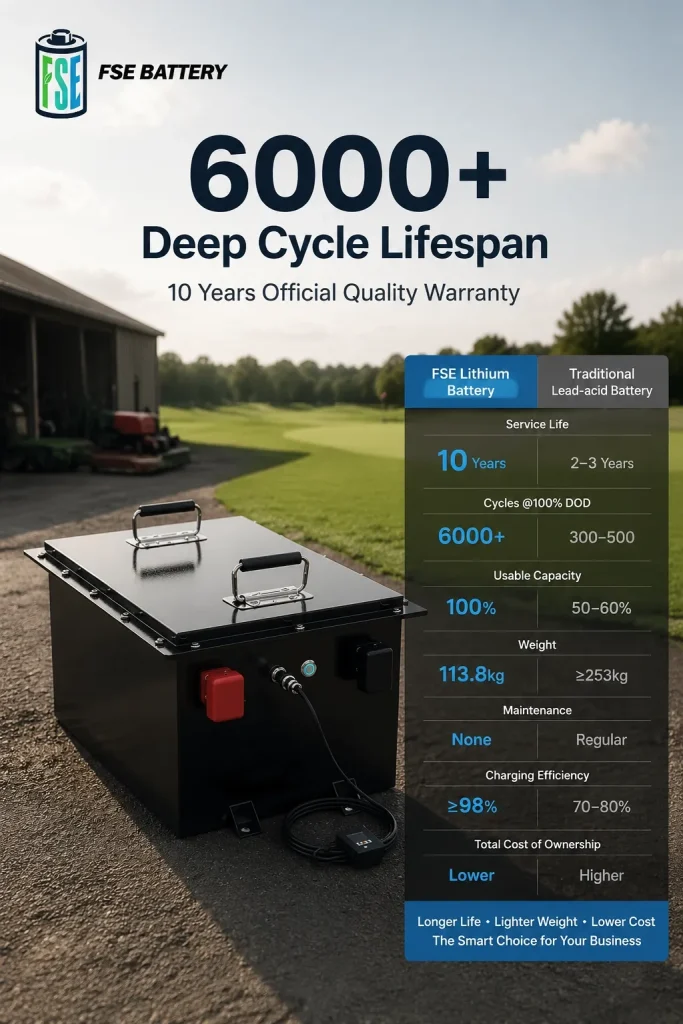
LiFePO4 batteries can offer several practical benefits compared with traditional lead-acid battery banks. These may include more stable discharge voltage, greater usable energy, faster charging capability, reduced routine maintenance, and longer cycle life under appropriate operating conditions.
LiFePO4 batteries do not require watering or lead-acid equalization procedures. However, the vehicle’s charger, controller, cable system, mounting structure, and voltage settings may need to be modified during a lithium conversion.
A properly engineered conversion is essential. Installing a higher-voltage or higher-capacity battery does not automatically increase vehicle speed, torque, or range. Final performance depends on the complete electrical and mechanical system.
OEM and ODM Customization
FSEBATTERY provides OEM and ODM lithium battery manufacturing support for golf cart manufacturers, battery distributors, fleet operators, vehicle integrators, and private-label brands.
Available customization options include:
- Battery voltage and capacity
- Enclosure dimensions and mounting structure
- Cell brand and cell configuration
- BMS model and protection parameters
- CAN, RS485, RS232, and Modbus protocols
- Connectors and cable harnesses
- Charging interface
- Bluetooth, APP, LCD, WiFi, 4G, and GPS
- Self-heating system
- Power switch and circuit breaker
- Active balancing
- Logo printing and private labeling
- Packaging and multilingual documentation
The engineering process may include requirement review, electrical evaluation, enclosure drawing, communication matching, prototype development, testing, sample approval, and mass production.
| Specifications | ||||
| Lithium Cell Type | LiFePO4 | |||
| Nominal Voltage | 76.8V | |||
| Nominal Capacity | 200Ah | |||
| Nominal Energy | 15.36kWh | |||
| Max Charge Voltage | 86.4V | |||
| Discharge Cut-off Voltage | 60V | |||
| Max Continues Charge Current | 190A | |||
| Max Continues Discharge Current | 190A | |||
| Dimensions(L x W x H) | 1138 × 410 × 253 mm | |||
| Weight | 125 kg | |||
| Cycle Life | >6000 cycles (DOD 80% 0.2C) | |||
| Internal Resistance | ≤10 mΩ | |||
| Max Series Connections | 4 | |||
| Max Parallel Connections | 4 | |||
| Self-discharge | ≤2% per month | |||
| IP Rating | IP65 | |||
| Charge Temperature | 0°C ~ 50°C | |||
| Discharge Temperature | (-20°C ~ 65°C) | |||
| Storage Temperature | (-10℃ ~ 50℃) | |||
| Self-heating | Optional | |||
| LCD Display | Optional | |||
| Optional Upgrades | Self-heating / Bluetooth / APP / WiFi / 4G / GPS / LCD Display / RS485 / RS232 / CAN bus / RJ45 / Modbus / Power Switch / Circuit Breaker / Active Balance / etc | |||
| BMS | JBD BMS/JK BMS | |||
| Terminal | M6 / M8 | |||
| Battery Case | Metal | |||
| Warranty | 10 Years | |||
| Silk-screen / Label / Laser Logo | Yes | |||
| User Manual | Yes | |||
| OEM / ODM | Yes | |||
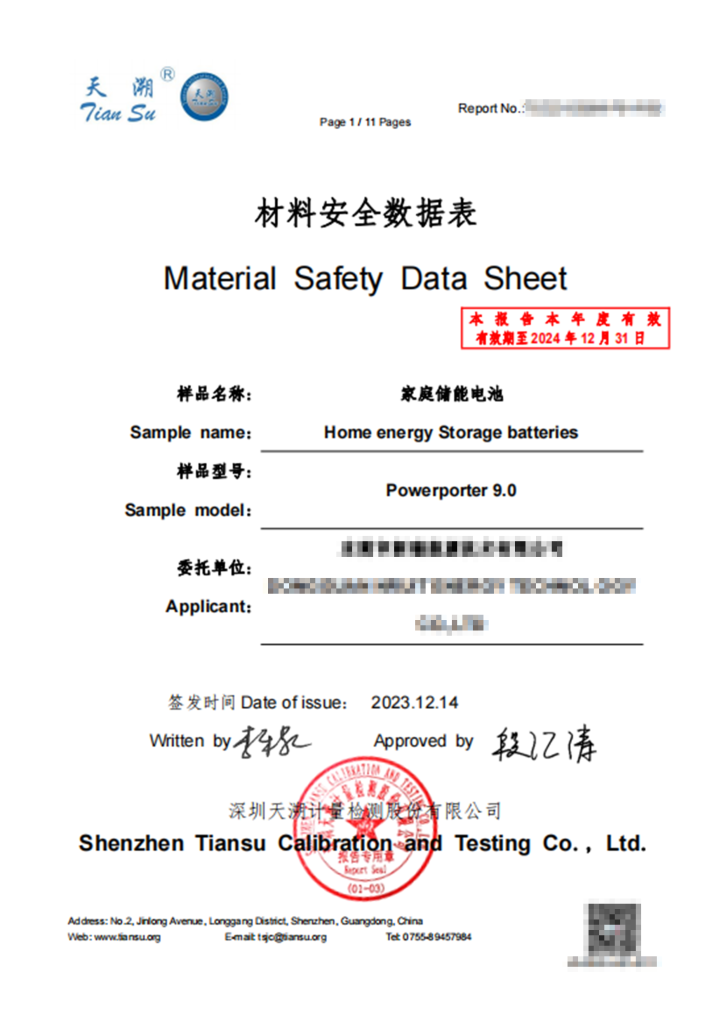
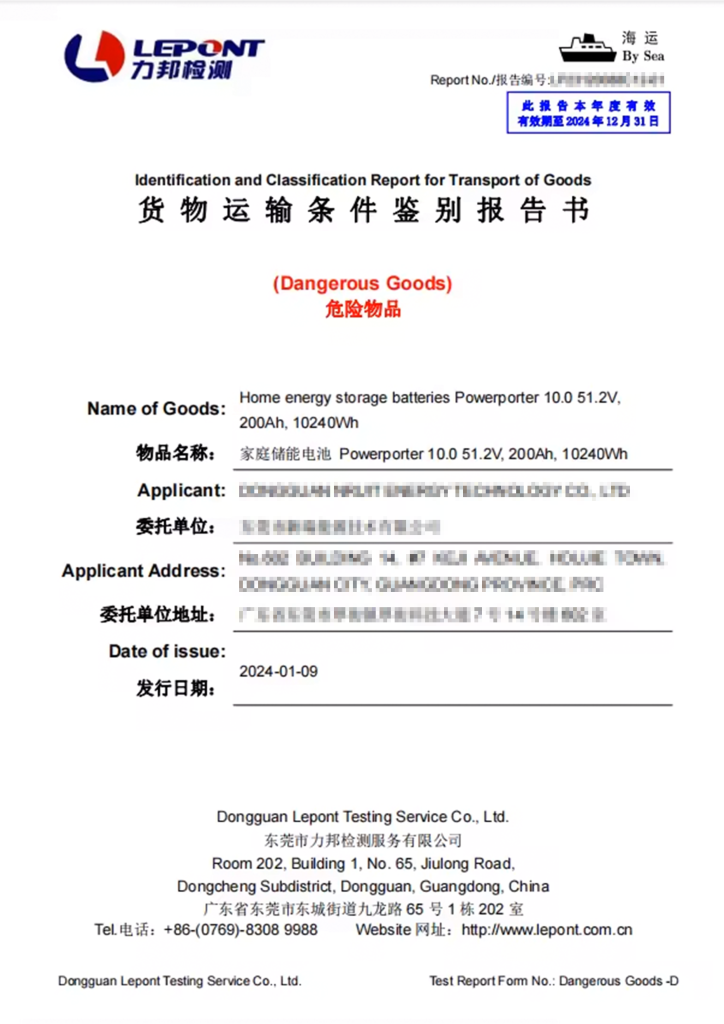
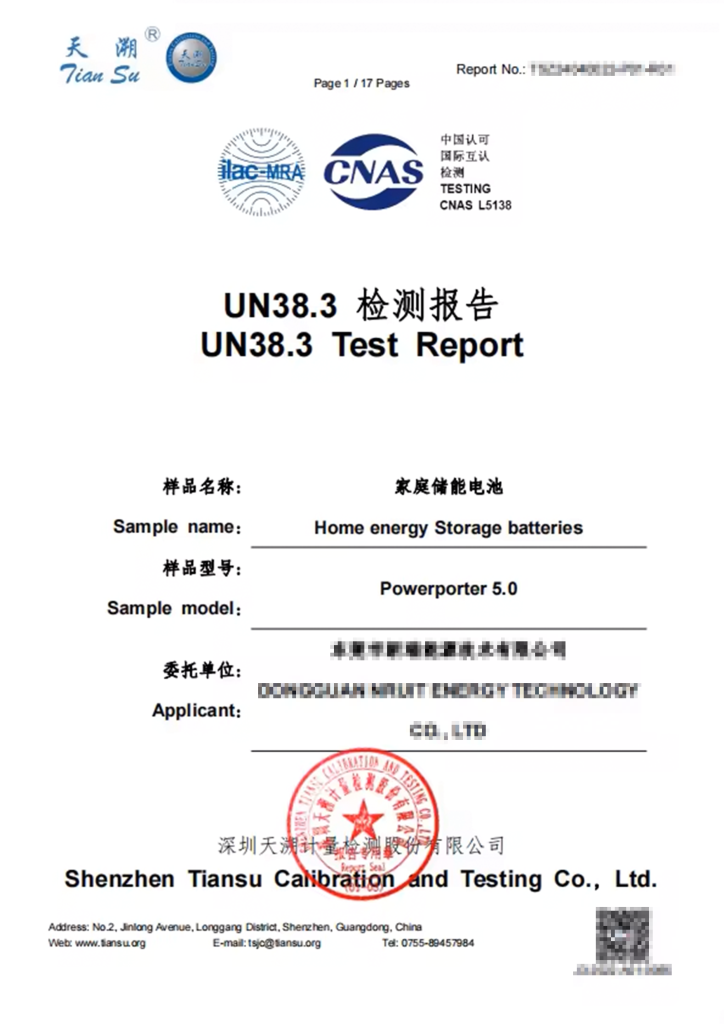
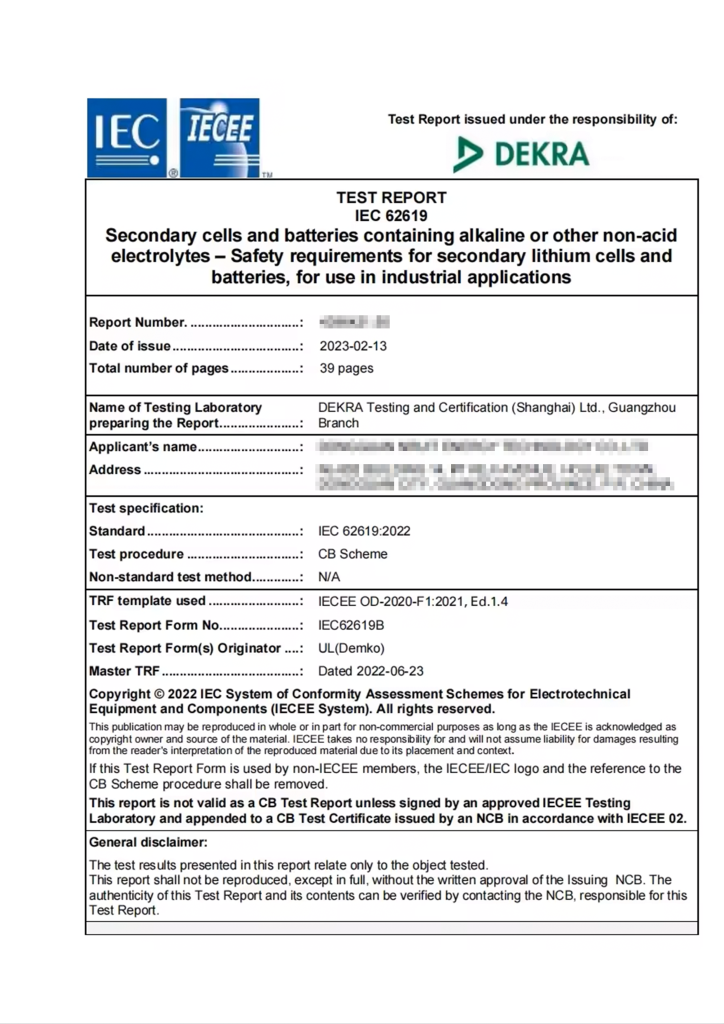
| Certifications | CE / MSDS / UN38.3/UL | |||
Frequently Asked Questions (FAQs)
Is 76.8V normal for a 72V golf cart battery?
Yes. The term “72V” describes the vehicle system class, while the actual nominal voltage of this LiFePO4 battery is 76.8V. The vehicle controller and charger must support its complete operating voltage range.
What charger is required for this battery?
A compatible LiFePO4 charger with an 86.4V maximum charging voltage is required. Charging current, connector type, and communication functions should be selected according to the battery and vehicle configuration.
How far can the battery travel on one charge?
Exact driving range cannot be determined from battery capacity alone. It depends on vehicle weight, passenger load, motor efficiency, controller settings, speed, terrain, tire condition, temperature, and driving behavior.
Does the battery support CAN communication?
CAN bus is available as an optional function. The communication protocol must be matched with the controller, display, charger, or vehicle control unit before production.
Can the battery be charged below 0°C?
Standard charging is specified from 0°C to 50°C. For colder environments, an optional self-heating system can be configured for low-temperature charging projects.
Can the enclosure and connectors be customized?
Yes. Enclosure dimensions, mounting points, connectors, cable harnesses, communication ports, logos, labels, and selected functions can be customized for qualified OEM and bulk orders.
Is the battery compatible with every 72V golf cart?
No. Compatibility depends on the controller voltage range, maximum charge voltage, motor system, charger, available installation space, connectors, cables, mounting design, and communication requirements.
RELATED PRODUCTS

24V 50Ah Forklift Battery
48V 20AH Equipment Batteries
24V 100AH PowerWall HESS
24V 100AH Equipment Batteries
12V 100AH RV Batteries