
Lithium Golf Cart Batteries: Complete Guide 2026
- Niko
- 2026-01-07
Table of Contents
Lithium golf cart batteries represent the latest advancement in golf cart power technology. These modern batteries use lithium iron phosphate (LiFePO4) chemistry, offering superior performance compared to traditional lead-acid batteries.
What Are Lithium Golf Cart Batteries?
Lithium golf cart batteries use advanced LiFePO4 (Lithium Iron Phosphate) chemistry to deliver reliable, long-lasting power for golf carts. Unlike traditional lead-acid batteries, lithium batteries provide consistent voltage throughout their discharge cycle, lighter weight, and significantly longer lifespan.
Why Choose Lithium Over Lead-Acid Batteries?
Lithium golf cart batteries offer several key advantages:
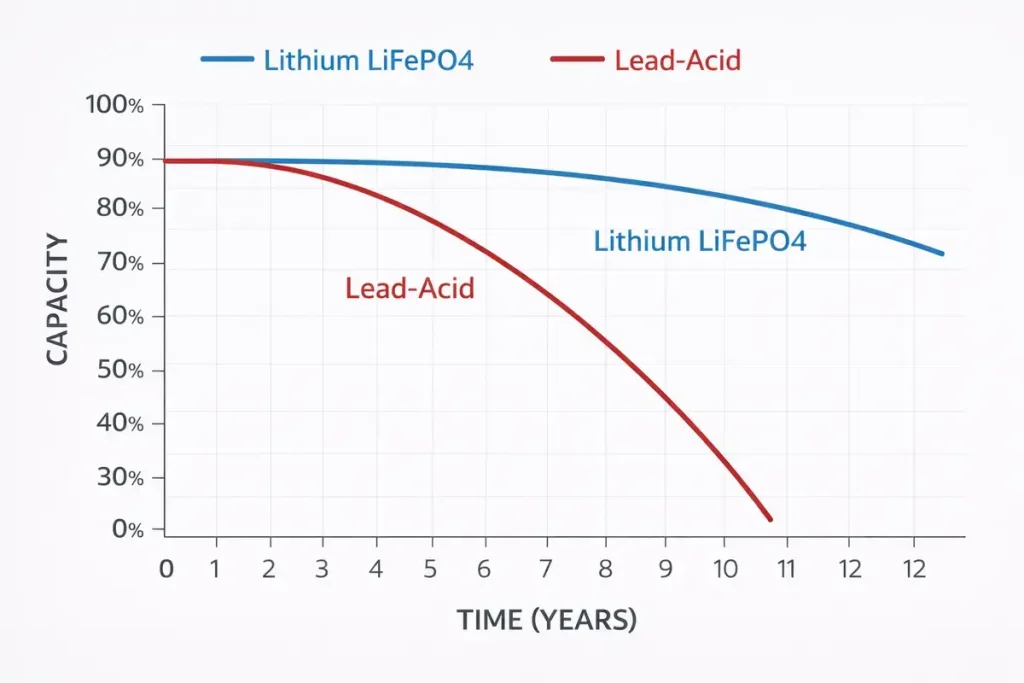
1. Longer Lifespan: Lithium batteries typically last 8-12 years with 3000-5000 cycles compared to 3-5 years for lead-acid batteries. This extended lifespan of LiFePO4 golf cart batteries means fewer replacement cycles and better long-term value.
2. Lightweight Design: Lithium golf cart batteries are up to 70% lighter than lead-acid alternatives, significantly improving cart performance and range. The reduced weight allows for better acceleration and extends driving distance on a single charge.
3. Faster Charging: Most lithium golf cart batteries fully charge in 2-4 hours versus 8-12 hours for lead-acid batteries. Fast charging capability means minimal downtime and more hours of golf cart usage throughout the day.
4. Zero Maintenance: No water refilling, no terminal cleaning, and no acid spills.
5. Consistent Power: Maintai
Battery Lifespan and Durability
Lithium golf cart batteries typically last 8-12 years under normal operating conditions, with 3000-5000 charge cycles. Factors affecting lifespan include:
- Operating temperature (ideal: 15-25°C)
- Charge-discharge depth and frequency
- Proper charging practices
- Storage conditions during off-season
For more details, read our guide: How Long Do Lithium Golf Cart Batteries Last?
Choosing the Right Voltage: 36V, 48V, or 72V
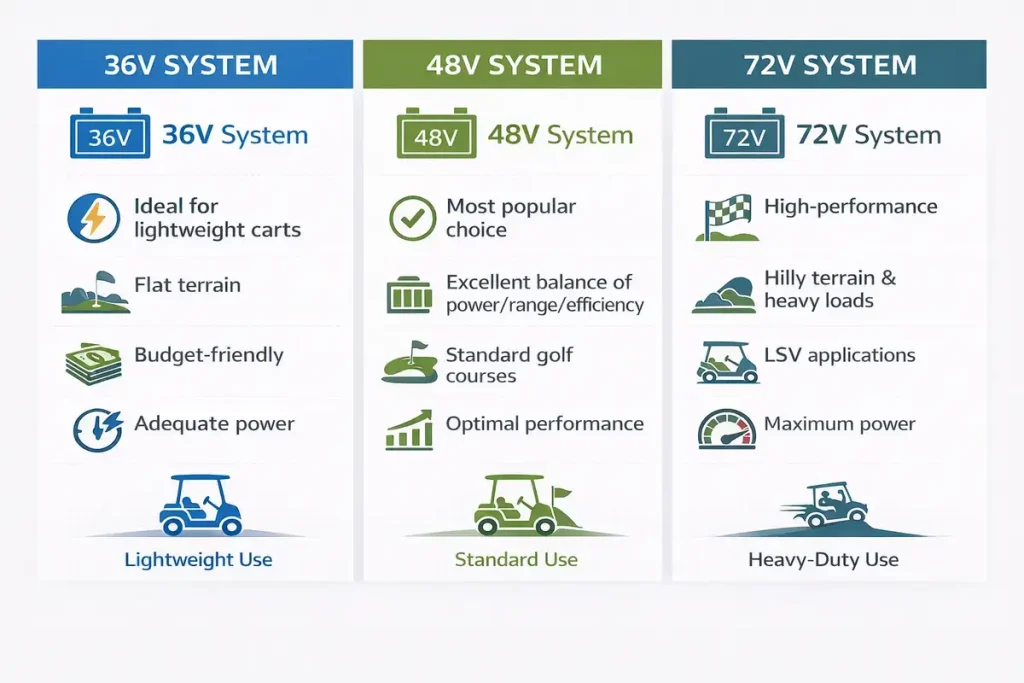
36V Systems: Ideal for lightweight carts and flat terrain. Budget-friendly option with adequate power for most golf course use.
48V Systems: The most popular choice. Offers excellent balance of power, range, and efficiency for standard golf cart applications.
72V Systems: High-performance option for hilly terrain, heavy loads, or LSV (Low-Speed Vehicle) applications. Maximum power and range.
Charging and Maintenance Guide
- Use only LiFePO4-compatible chargers
- Charge after each use when battery drops below 50%
- Avoid deep discharge below 20% regularly
- Store at 50-60% charge for extended periods
- Keep batteries in temperature-controlled environment
Maintenance: Lithium batteries require virtually no maintenance – no water refilling, no terminal cleaning, just periodic visual inspection.
Cost Comparison and Return on Investment
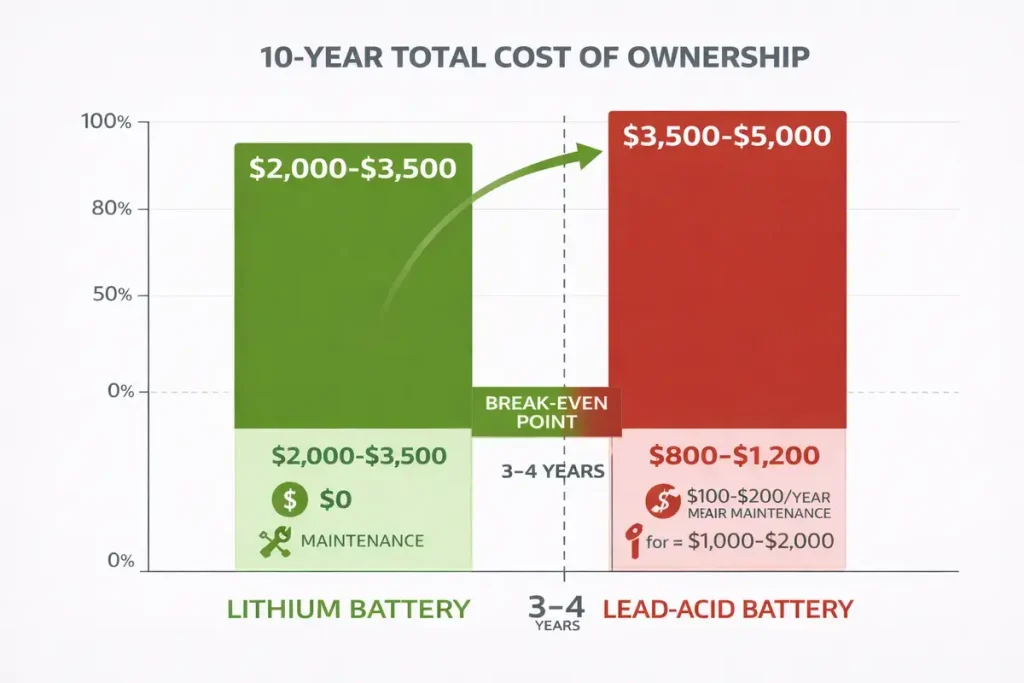
While lithium golf cart batteries cost 2-3x more upfront than traditional lead-acid batteries, they offer superior ROI through longer lifespan and reduced maintenance costs.
| Factor | Lead-Acid | Lithium |
|---|---|---|
| Initial Cost | $800-1200 | $2000-3500 |
| Lifespan | 3-5 years | 8-12 years |
| Maintenance | $100-200/year | $0 |
| Energy Efficiency | 70-75% | 95-98% |
| Total 10-Year Cost | $3500-5000 | $2000-3500 |
Break-even typically occurs within 3-4 years.
Top Golf Cart Battery Recommendations 2026
Based on performance, reliability, and value, here are our top-rated lithium golf cart batteries:
Best 36V Golf Cart Batteries
• 36V 105Ah LiFePO4 Battery – Ideal for standard golf carts, 3000+ cycles
Best 48V Golf Cart Batteries
• 48V 105Ah Premium Battery – Most popular choice, excellent range
• 48V 200Ah Extended Range – For heavy-duty applications
Best 72V Golf Cart Batteries
• 72V 50Ah High Performance – Perfect for hilly terrain
• 72V 105Ah Professional – Maximum power and range
• 72V 200Ah Heavy Duty – For LSV and commercial use
Frequently Asked Questions
Q: How long do lithium golf cart batteries last?
A: Lithium golf cart batteries typically last 8-12 years or 3000-5000 charge cycles, significantly longer than lead-acid batteries which last 3-5 years.
Q: Can I replace my lead-acid batteries with lithium?
A: Yes, most golf carts can be upgraded to lithium batteries. You’ll need to ensure your charger is compatible with LiFePO4 chemistry or purchase a new lithium-compatible charger.
Q: Do lithium golf cart batteries require maintenance?
A: No, lithium batteries require virtually zero maintenance. Unlike lead-acid batteries, there’s no water refilling, no terminal cleaning, and no equalization charging needed.
Q: Are lithium golf cart batteries worth the cost?
A: Yes, while lithium batteries cost 2-3x more upfront, they last 2-3x longer, require no maintenance, and offer better performance. Break-even typically occurs within 3-4 years.
Q: What voltage should I choose for my golf cart?
A: 48V is the most popular choice for standard golf carts. Choose 36V for lightweight carts on flat terrain, or 72V for hilly terrain, heavy loads, or LSV applications.
Q: Can lithium batteries be charged in cold weather?
A: Most lithium batteries should not be charged below freezing (0°C/32°F). Many quality batteries include built-in heating systems or low-temperature charging protection.
Q: How fast can I charge lithium golf cart batteries?
A: Most lithium batteries can be fully charged in 2-4 hours with an appropriate charger, compared to 8-12 hours for lead-acid batteries. Fast charging capabilities depend on the battery’s BMS specifications.
Q: Will lithium batteries improve my golf cart’s performance?
A: Yes, lithium batteries are 50-70% lighter than lead-acid, which improves acceleration, speed, and range. They also maintain consistent voltage throughout discharge for steady performance.
ns voltage throughout discharge for consistent speed and performance.